
A job title can tell someone where you worked. It cannot always explain how you think, what you notice, or why you made the choices that shaped your growth.
That is why I believe the resume of the future will look less like a list of positions and more like a carefully selected portfolio of choices.
This does not mean traditional resumes are disappearing. You still need a clear, concise resume for applications and applicant tracking systems. However, your resume should point to something deeper. Your portfolio should help an employer, mentor, professor, or scholarship committee understand the decisions behind your experience.
When did you choose a difficult project instead of the easy option? When did you notice a problem and create a solution? When did you change direction because you learned something important about yourself?
Those decisions tell a more complete story.
When I returned to school after a 13 year gap, I did not have a perfectly organized career path. I had questions, responsibilities, and a desire to build a meaningful future. I had to explore, test possibilities, and make one decision at a time.
That process taught me that education is not simply a collection of credits. It can become a launchpad for success when you use it to make intentional choices.
Your resume shows movement. Your portfolio shows direction.
A resume usually answers a basic question:
Where have you been?
A portfolio can answer better questions:
- What problems have you chosen to solve?
- What skills have you intentionally developed?
- How have your experiences influenced your next decision?
- What evidence shows that you can contribute?
- What kind of work connects to your life purpose?
Career portfolios commonly include resumes, work samples, projects, awards, certifications, testimonials, and professional development. Resources from Indeed and the University of Minnesota both emphasize that portfolios help people provide tangible evidence of their skills and accomplishments.
I would add one more element: the reasoning behind your choices.
A project is more powerful when the reader understands why you selected it. A certificate becomes more meaningful when you explain the skill it helped you build. A part time job becomes stronger evidence when you show how you used it to develop communication, organization, customer service, or leadership.
Your portfolio is not a scrapbook. It is a record of intentional growth.

Start a choice log before you start building a portfolio
Most students wait until graduation to remember what they accomplished. By then, important details have disappeared.
Instead, create a simple choice log. You can keep it in a notebook, a document, or a folder. Every month, record decisions that helped you learn, contribute, or move closer to your goals.
For each decision, write down:
- The situation: What was happening?
- The choice: What did you decide to do?
- The reason: Why did you choose that path?
- The action: What steps did you take?
- The result: What changed?
- The lesson: What did you learn?
- The next move: What will you do differently or build next?
Here is a simple example:
Situation: A student organization had low attendance at its events.
Choice: I decided to test a new communication strategy instead of repeating the same flyers.
Action: I interviewed members, rewrote the event description, and created a reminder schedule.
Result: Registration increased and the team had a clearer process.
Lesson: I enjoy finding communication problems and improving systems.
Next move: I will pursue more projects involving outreach, messaging, and audience engagement.
That entry can become a portfolio case study, a resume bullet, and an interview answer.
One decision creates several career assets.
Document the choices that do not come with impressive titles
Many students believe they have nothing to include because they have not held a prestigious internship. That assumption leaves valuable evidence out of the story.
Your choices may be hidden inside ordinary experiences.
A class project
You chose to lead the research instead of waiting for someone else to organize the group.
Document:
- The question your team explored
- The role you selected
- The research or tools you used
- The disagreement or challenge you managed
- The final recommendation or result
A campus job
You noticed that students were confused by a process, so you created a clearer explanation or resource.
Document:
- The problem students faced
- How frequently it occurred
- What you changed
- Who benefited
- What feedback you received
Family responsibilities
You balanced school with caregiving, transportation, work, or household responsibilities.
Document:
- How you managed competing priorities
- How you communicated with others
- What systems helped you stay organized
- What the experience taught you about resilience and responsibility
A setback
You changed your major, withdrew from a course, lost an opportunity, or received a rejection.
Document:
- What you initially believed
- What the experience revealed
- How you responded
- What decision you made afterward
- How the experience improved your next step
A portfolio should not pretend that every decision worked perfectly. It should show that you can learn, adjust, and keep moving.
Use the Choice, Action, Evidence, Learning framework
To make your portfolio useful, organize each project around four ideas:
1. Choice
Explain the decision you made.
Maybe you chose a research topic, joined a student organization, attended a workshop, or contacted a professional. Be specific about the decision instead of simply listing the activity.
2. Action
Describe what you actually did.
Avoid vague statements such as “I helped with a project.” Explain whether you analyzed information, created a plan, interviewed people, organized materials, presented findings, or improved a process.
3. Evidence
Show what supports your story.
Evidence may include:
- A presentation
- A research paper
- A lesson plan
- A project summary
- A writing sample
- A design
- A spreadsheet
- A certificate
- A supervisor comment
- A measurable result
- A reflection from a team member
Do not include confidential information or private organizational data. Remove names, identifying details, and protected information when necessary.
4. Learning
Explain what the experience taught you about your skills or direction.
This is the part many applicants skip. It shows that you are not simply collecting activities. You are paying attention to patterns.
Maybe you learned that you enjoy:
- Explaining complex ideas
- Improving inefficient systems
- Supporting people through difficult decisions
- Building relationships
- Working with data
- Creating practical solutions
- Leading teams through uncertainty
Those patterns can help you choose courses, internships, mentors, and career experiments.
That is the heart of Spark-ED. You do not have to know your final destination before you begin. You can throw everything against the wall as you explore, then pay attention to what keeps pulling you forward.

Build a portfolio that an employer can understand quickly
A portfolio does not need to be complicated. A clean PDF, simple website, or organized digital folder can work.
Start with these sections:
- Short introduction: Who you are and what problems or fields interest you.
- Career direction: The type of opportunity you are exploring now.
- Resume: A focused one or two page summary.
- Three to five choice stories: Your strongest examples of judgment, action, and growth.
- Work samples: Documents or links that support each story.
- Skills evidence: A short explanation of where you developed each important skill.
- Reflection: What you are learning about your strengths and life purpose.
- Contact information: A professional email and relevant links.
Be selective. The University of Minnesota advises students to display their best work, maintain clear structure, and tailor the portfolio to their career field. You do not need to upload everything you have ever completed.
Choose evidence that supports the opportunity you want next.
A portfolio for an education role may include lesson plans, tutoring materials, classroom reflections, and presentations. A portfolio for a business role may include project plans, process improvements, research, and data summaries. A portfolio for a communications role may include writing samples, campaign concepts, event materials, and audience insights.
The format can change. The decision story remains useful.
Connect your portfolio to your resume
Your resume and portfolio should agree with each other.
If your resume says you improved event participation, your portfolio should include a short explanation of how you did it. If your resume lists research experience, your portfolio should show the question, method, and result. If your resume highlights leadership, your portfolio should explain what you decided, who you supported, and what changed.
This connection creates credibility.
Use your resume to create interest. Use your portfolio to provide proof.
You can also connect this approach to the 48 Hour Portfolio strategy. A small project can become more valuable when you document not just the finished product, but also the decisions that shaped it.
Your choices deserve context
Not everyone receives the same opportunities.
Some students can accept unpaid internships, travel for conferences, or spend extra hours on campus. Others work, care for family, commute long distances, or manage financial pressure. Redlining, unequal school funding, transportation barriers, and differences in access to professional networks have shaped who gets to accumulate traditional career experiences.
A portfolio does not erase those inequities. It does give you a way to provide context and make invisible work visible.
If you worked while attending school, explain what you learned. If you supported your family, describe the skills involved. If you returned to education after a gap, show the decisions and discipline that made your return possible.
You are not making excuses. You are giving the reader a fuller and more accurate picture of your preparation.
Your path may look different from someone else’s path. Different does not mean less valuable.
Review your portfolio every month
Your portfolio should grow with you.
At the end of each month, ask:
- What decision am I proud of?
- What problem did I help solve?
- What evidence did I create?
- What feedback did I receive?
- What skill did I strengthen?
- What did I learn about the work I enjoy?
- What choice should I make next?
This practice turns career planning into an ongoing conversation with yourself.
It also changes how you approach education. Instead of asking only, “What grade did I earn?” you begin asking, “What capability did I build, and where can I use it?”
That is an investment in me.
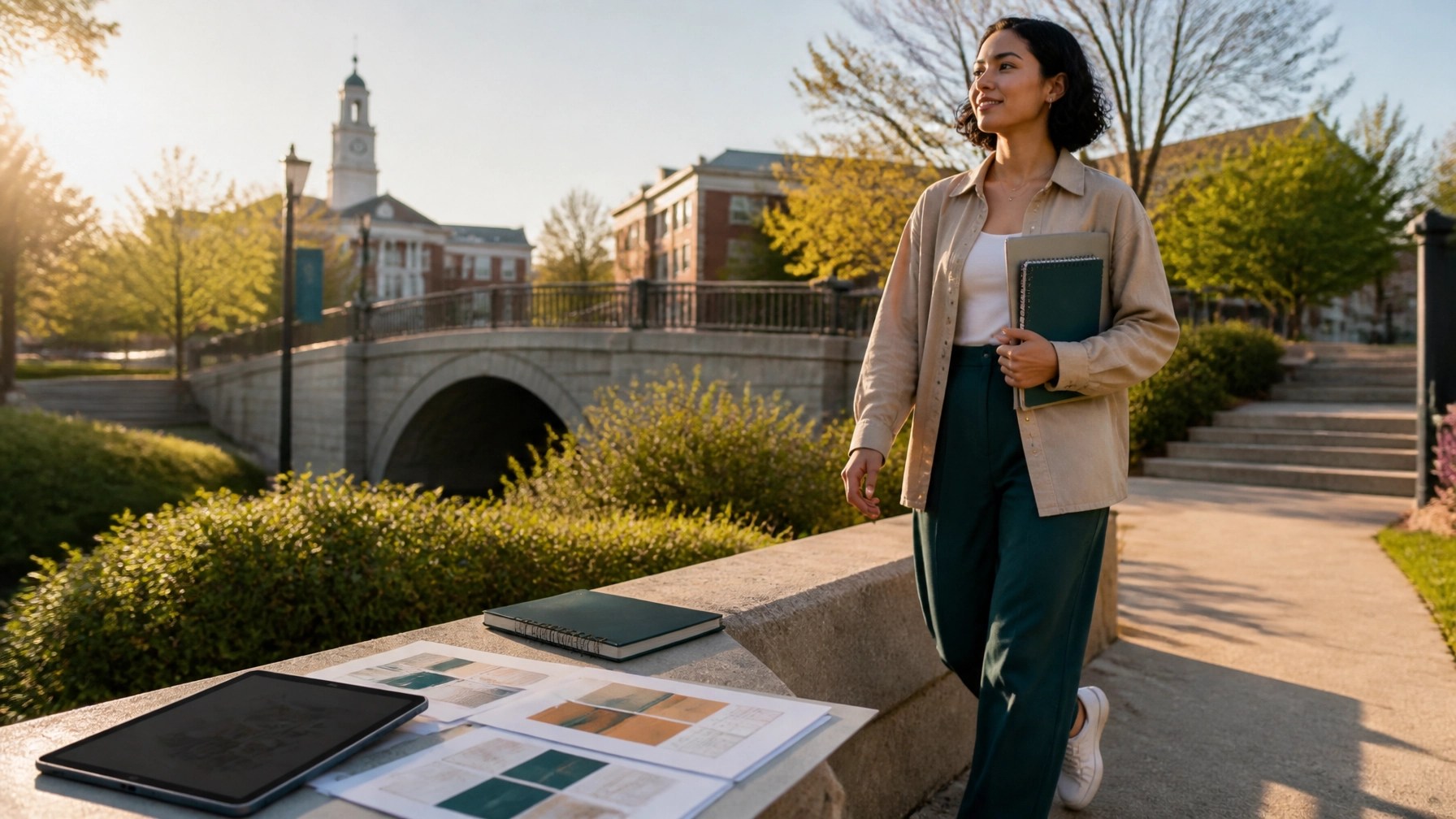
Your future is built from choices
The resume of the future will not only describe where you worked. It will help people understand how you think, what you value, and how you respond to real problems.
You do not need a perfect story. You need an honest record of movement.
Document the class you chose because it challenged you. Save the project that required you to learn a new skill. Write down the conversation that changed your direction. Record the rejection that helped you improve your strategy. Keep evidence of the problems you solved, even when nobody gave you a formal title.
Over time, those choices become a pattern.
That pattern can reveal your strengths, guide your education, and bring your career closer to your life purpose. Education becomes more than a trophy. It becomes a launchpad for success.
Start with one choice from this week. Write down what happened, what you did, what changed, and what you learned.
Then keep going.
For more practical guidance on scholarships, career planning, student success, and purposeful education, subscribe to the Naphtali Tekoa Bryant newsletter. You can also follow naphtalitekoabryant.online for new strategies that help students, parents, and educators turn opportunity into action.
Frequently asked questions
What is a career portfolio?
A career portfolio is an organized collection of work samples, accomplishments, credentials, feedback, and reflections that provides evidence of your skills and growth. It can include academic projects, employment examples, volunteer work, certifications, and leadership experiences.
How is a portfolio different from a resume?
A resume gives a concise summary of your education, experience, skills, and accomplishments. A portfolio provides deeper evidence and context. Your resume tells the reader what you have done, while your portfolio can show how you made decisions, solved problems, and produced results.
What should students include in a career portfolio?
Students can include a short introduction, career goals, resume, class projects, work samples, certifications, awards, volunteer experience, leadership examples, recommendations, and reflections about what they learned. Select work that relates to the opportunity you want next.
Can I create a portfolio without professional experience?
Yes. Class projects, campus activities, family responsibilities, volunteer work, personal projects, and part time jobs can all demonstrate valuable skills. Explain the choice you made, the action you took, the evidence available, and what you learned.
How often should I update my portfolio?
Review your portfolio at least once a month or once each semester. Add new projects, results, feedback, certifications, and reflections while the details are still fresh. Remove work that no longer supports your direction.
Should I include unsuccessful projects or setbacks?
You can include a setback when it demonstrates reflection, learning, and improved decision making. Focus on what happened, how you responded, and what changed in your approach afterward. Protect confidential information and avoid blaming others.
Categories: Career Strategy, Resume Building, Student Success, Purpose Driven Education
Tags: career portfolio, resume portfolio, college student career planning, skills based hiring, portfolio projects, career decisions, resume tips, Spark-ED, launchpad for success, investment in me, life purpose
Recommended publication time: Tuesday or Wednesday at approximately 10:00 a.m. in the audience’s local time. Use website, newsletter, and social analytics to refine this starting point.
Sources and further reading
- Indeed: 12 Elements to Include in a Career Portfolio
- University of Minnesota: Portfolios and Work Samples
- Virginia Tech: Beyond the Resume
- The 48 Hour Portfolio
- Naphtali Tekoa Bryant Newsletter
{“@graph”:[{“@id”:”https://naphtalitekoabryant.online/#resume-portfolio-choices”,”@type”:”BlogPosting”,”image”:[“https://cdn.marblism.com/Png3Sq2j1uY.webp”,”https://cdn.marblism.com/Y2pOepnxf8F.webp”,”https://cdn.marblism.com/2HFEnurQHCW.webp”,”https://cdn.marblism.com/Q3hB91TrfmZ.webp”%5D,”author”:{“url”:”https://naphtalitekoabryant.online/about”,”name”:”Naphtali Bryant”,”@type”:”Person”},”citation”:[“https://www.indeed.com/career-advice/resumes-cover-letters/career-portfolio”,”https://www.cehd.umn.edu/current-students/career-services/portfolios-and-work-samples”,”https://career.vt.edu/blog/2025/05/15/beyond-the-resume-using-a-portfolio-to-showcase-your-skills-and-experience”%5D,”headline”:”The Resume of the Future Is a Portfolio of Choices: Documenting Decisions, Not Just Roles”,”keywords”:[“career portfolio”,”resume portfolio”,”college student career planning”,”skills based hiring”,”portfolio projects”,”career decisions”,”resume tips”,”Spark-ED”,”launchpad for success”,”life purpose”],”publisher”:{“url”:”https://naphtalitekoabryant.online/”,”name”:”Naphtali Tekoa Bryant”,”@type”:”Organization”},”inLanguage”:”en-US”,”description”:”Learn how students and early career professionals can build a career portfolio that documents intentional decisions, skills, evidence, learning, and direction instead of listing job titles alone.”,”dateModified”:”2026-08-15″,”datePublished”:”2026-08-15″,”articleSection”:[“Career Strategy”,”Resume Building”,”Student Success”,”Purpose Driven Education”],”mainEntityOfPage”:{“@id”:”https://naphtalitekoabryant.online/”,”@type”:”WebPage”}},{“@id”:”https://naphtalitekoabryant.online/#resume-portfolio-choices-faq”,”@type”:”FAQPage”,”mainEntity”:[{“name”:”What is a career portfolio?”,”@type”:”Question”,”acceptedAnswer”:{“text”:”A career portfolio is an organized collection of work samples, accomplishments, credentials, feedback, and reflections that provides evidence of your skills and growth.”,”@type”:”Answer”}},{“name”:”How is a portfolio different from a resume?”,”@type”:”Question”,”acceptedAnswer”:{“text”:”A resume gives a concise summary of your education, experience, skills, and accomplishments. A portfolio provides deeper evidence and context, including how you made decisions, solved problems, and produced results.”,”@type”:”Answer”}},{“name”:”What should students include in a career portfolio?”,”@type”:”Question”,”acceptedAnswer”:{“text”:”Students can include a short introduction, career goals, resume, class projects, work samples, certifications, awards, volunteer experience, leadership examples, recommendations, and reflections about what they learned.”,”@type”:”Answer”}},{“name”:”Can I create a portfolio without professional experience?”,”@type”:”Question”,”acceptedAnswer”:{“text”:”Yes. Class projects, campus activities, family responsibilities, volunteer work, personal projects, and part time jobs can demonstrate valuable skills when you explain the choice, action, evidence, and learning.”,”@type”:”Answer”}},{“name”:”How often should I update my portfolio?”,”@type”:”Question”,”acceptedAnswer”:{“text”:”Review your portfolio at least once a month or once each semester. Add new projects, results, feedback, certifications, and reflections while the details are still fresh.”,”@type”:”Answer”}}]}],”@context”:”https://schema.org”}


