
Let’s have a real conversation for a second. For decades, we’ve been told that the golden ticket to a successful career is a high GPA. We stay up until 3:00 AM cramming for exams, obsessing over every decimal point, and stressing over a "B" as if it’s a life sentence.
But here’s the reality check: it’s May 2026, and the world has changed. In a landscape dominated by AI and rapid technological shifts, employers are starting to look right past that 3.8 or 4.0. Why? Because a GPA tells them you can follow instructions and memorize facts. It doesn’t tell them you can solve a crisis when the "instructions" don’t exist.
At Naphtali Tekoa Bryant, we believe education is a launchpad for success, but only if you’re building the right engine. If you want to stand out, it’s time to move beyond the transcript and start building your Problem-Solving Portfolio.
Why the GPA is Losing Its Shine
Don’t get me wrong: doing well in class is great. It’s an investment in me, and it shows discipline. However, in the modern workforce, a GPA is becoming a "floor," not a ceiling. It might get your foot in the door, but it won’t get you a seat at the table.
Employers are shifting toward "skills-first" hiring. They want to see durable skills: critical thinking, adaptability, and the ability to navigate ambiguity. They aren’t asking, "What was your grade in Macroeconomics?" They’re asking, "When the supply chain broke last quarter, how would you have fixed it?"
A problem-solving portfolio is your evidence. It’s the difference between saying "I’m a leader" and showing a documented case study of how you saved your campus organization from a $2,000 budget deficit.

The Campus Lab: Turning Orgs into Portfolios
You don’t need a high-level internship to build a portfolio. Your "lab" is right there on campus. Whether you’re in the Black Student Union, a coding club, a dance team, or student government, you are surrounded by problems waiting for a solution.
When you treat these organizations as a playground for Spark-ED (purpose-driven education), you stop just "participating" and start "producing."
How to Identify a Portfolio-Worthy Problem
Stop looking for "activities" and start looking for "friction."
- Does your club have low attendance? That’s a marketing and engagement problem.
- Is the registration process for your campus event a nightmare? That’s a systems and UX problem.
- Is there a lack of funding for student initiatives? That’s a resource-allocation and advocacy problem.
When you identify these, you’ve found your first portfolio entry. For more on how to navigate college hurdles, check out our college success resources.
The Anatomy of a Problem-Solving Portfolio
A great portfolio isn’t just a list of things you did. It’s a narrative of how you think. If you’re putting this together for a recruiter or a scholarship committee, use this six-part framework for every project:
-
The Problem & Context
What was the "fire" you were trying to put out? Be specific. Instead of saying "We needed more members," say "Our organization saw a 30% drop in active participation over two semesters, threatening our charter status." -
Your Specific Role
Were you the visionary, the builder, or the navigator? Own your contribution. If you were part of a team, explain how you collaborated. Employers value people who know how to play their position. -
The Process (The "How")
This is the most important part. Show your work. Did you conduct surveys? Did you research how other schools solved the issue? Did you fail on your first attempt? (Hint: Mentioning a failure and how you pivoted is gold for a recruiter.) -
Technical & Transferable Skills
List the tools you used. This could be anything from Excel and Python to "conflict resolution" and "public speaking." -
The Output
What did you actually create? A new bylaws document? A digital marketing campaign? A redesigned budget spreadsheet? If it’s digital, link it. If it’s physical, take a photo. -
Impact & Metrics
Numbers speak louder than adjectives. Use data to prove your success.- "Increased attendance by 50%."
- "Reduced event check-in time from 20 minutes to 5 minutes."
- "Raised $1,500 through a targeted social media campaign."
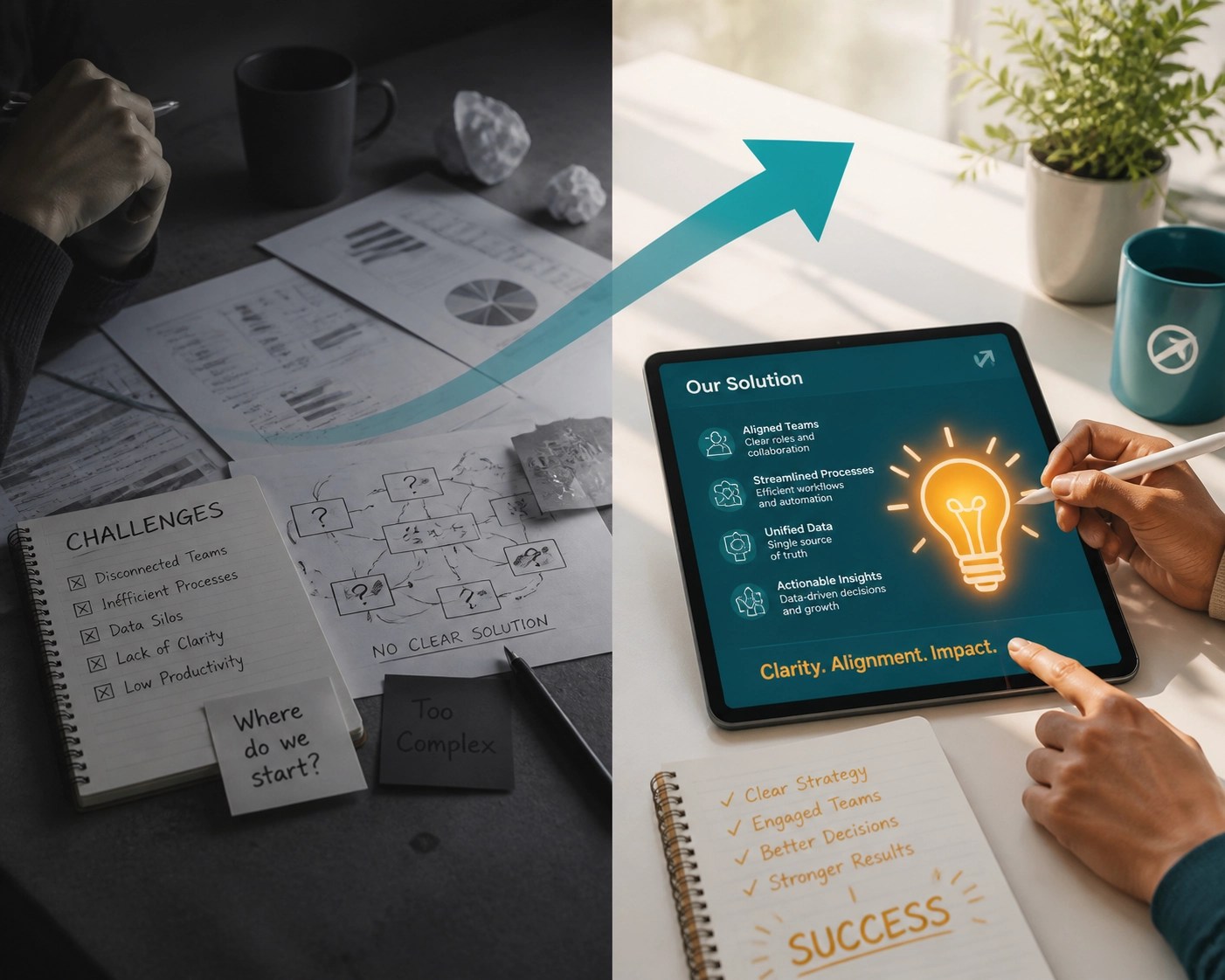
(Suggested visual: A clean, modern infographic showing the "Before" and "After" of a solved problem)
Using Claude as Your Strategic Thought Partner
In 2026, we don’t just work harder; we work smarter. While many students use AI just to write essays, you should be using Claude (by Anthropic) as a high-level consultant for your portfolio projects.
Claude is especially helpful for reasoning through complex systems and sharpening your thinking. Here’s how to use it to strengthen your portfolio:
- The Simulation: If you’re facing a problem in your student org, feed the details to Claude. Ask, "I am the president of a club with $500 and a 20% decline in engagement. What are five non-obvious ways to solve this using zero-budget marketing?"
- The Stress Test: Once you have a solution, ask Claude to play "devil’s advocate." Ask it to find flaws in your plan so you can address them before you implement it.
- The Portfolio Builder: After the project is done, paste your rough notes into Claude and ask, "Translate this project into a 'Problem-Solving Case Study' format that highlights my leadership and analytical skills for a Fortune 500 recruiter."
By using Claude as a "thought partner," you’re demonstrating that you understand how to leverage AI to augment human intelligence, a skill that is arguably more valuable than any degree in 2026.
Addressing the "Behind" Feeling
I know some of you might feel like you’re starting late. Maybe you took a gap year, or maybe you spent your first two years of college just trying to survive. I’ve been there. I know what it’s like to feel like the system wasn’t built for you, especially when dealing with systemic inequities that make "extra" projects feel like a luxury.
But here’s the beauty of the portfolio: it levels the playing field. A 4.0 GPA often requires a level of stability that not everyone has. A Problem-Solving Portfolio only requires an eye for opportunity and a willingness to try.
Whether you’re at a community college or an Ivy League, the problems are real, and the solutions are yours to build. This is your life purpose in action. You aren’t just a student; you are a solution-seeker.

Your Next Steps
You don’t need to build a 10-page website today. Start small.
- Pick one "friction point" in your current environment (work, school, or a club).
- Spend 3 hours this week researching the root cause of that friction.
- Document your findings. Even if you haven’t solved it yet, the research is the start of a portfolio piece.
If you’re looking for more ways to align your education with your career goals, dive into our education strategy articles.
The era of the "perfect student" is over. The era of the "effective problem solver" is here. Let’s get to work.
Join the Movement
Don’t miss out on the latest strategies to turn your education into a powerhouse. Subscribe to our newsletter for weekly insights on career success, AI tools, and purpose-driven living.
Category: Education
Tags: #CareerSuccess #ProblemSolving #CollegeTips #AIinEducation #Claude #PortfolioBuilding #NaphtaliTekoaBryant #SkillsFirst